
A meeting room that feels stuffy by mid-morning, persistent odours near a kitchenette, condensation around perimeter windows or recurring complaints of headaches are operational signals, not minor inconveniences. To improve office indoor air quality, facilities teams need to look beyond a single air purifier or thermostat adjustment and assess how the building is actually supplying, moving, cleaning and exhausting air.
Indoor air quality is shaped by the interaction of mechanical systems, occupancy, external conditions, cleaning practices, building fabric and workplace activities. The right response depends on the building and its use. A densely occupied Johannesburg office with windows that remain closed during hot weather has different priorities from a low-density office with mixed-mode ventilation. What matters is establishing a clear baseline, addressing the root causes and maintaining visibility after changes are made.
Start with the building, not the symptom
When people report poor air, it is tempting to treat the nearest symptom. A stronger fragrance, a portable unit or a lower temperature setpoint can appear to offer a quick answer. None necessarily deals with insufficient outside air, blocked return grilles, excessive humidity or contaminants generated within the space.
A practical review begins with the air path. Outside air should enter through suitable intake locations, pass through appropriately maintained plant and filters, reach occupied areas effectively, and leave through a controlled return or extract route. Problems can arise at every point: an intake close to vehicle activity, damaged duct insulation, a fan operating outside its intended schedule, or partitions that disrupt supply and return air movement.
The review should also account for how the office is used. Changes in headcount, desk layouts, meeting-room booking patterns and hybrid working can all alter ventilation demand. A system commissioned for one arrangement may no longer suit the current workplace.
Measure before deciding what to change
Good decisions need evidence, but measurement should be purposeful. A single spot reading taken on a quiet morning is rarely enough to describe conditions across a working week. Monitoring is most useful when it compares occupied and unoccupied periods, captures recurring peaks and links results to equipment operation and events within the building.
Carbon dioxide is commonly used as an indicator of whether outdoor-air provision is keeping pace with occupancy. It does not measure every pollutant, so it should not be treated as a complete verdict on air quality. Particulate matter can indicate fine dust and outdoor pollution entering the building. Volatile organic compounds may point to emissions from cleaning products, furnishings, finishes or stored materials. Temperature and relative humidity provide essential context because comfort, moisture and the performance of cooling systems are closely connected.
For larger or technically complex sites, permanent environmental monitoring can provide a more useful operational picture than occasional investigations. When combined with building-management data, occupancy patterns and maintenance records, trends become easier to interpret. For example, a regular afternoon rise in carbon dioxide in a meeting suite may show that the ventilation schedule, control logic or airflow balance needs attention, rather than suggesting a general problem throughout the floor.
Use thresholds carefully
There is no benefit in collecting data that no one reviews or understands. Facilities managers should agree what triggers investigation, who receives alerts and what evidence is recorded once corrective work has been completed. Readings must be interpreted in context, including sensor location, calibration, weather, outdoor conditions and space use.
A monitor placed directly beside a printer bank, open window or supply grille can produce data that is not representative of the wider room. It is better to use monitoring as part of an engineering-led assessment than as a standalone dashboard.
Improve ventilation performance first
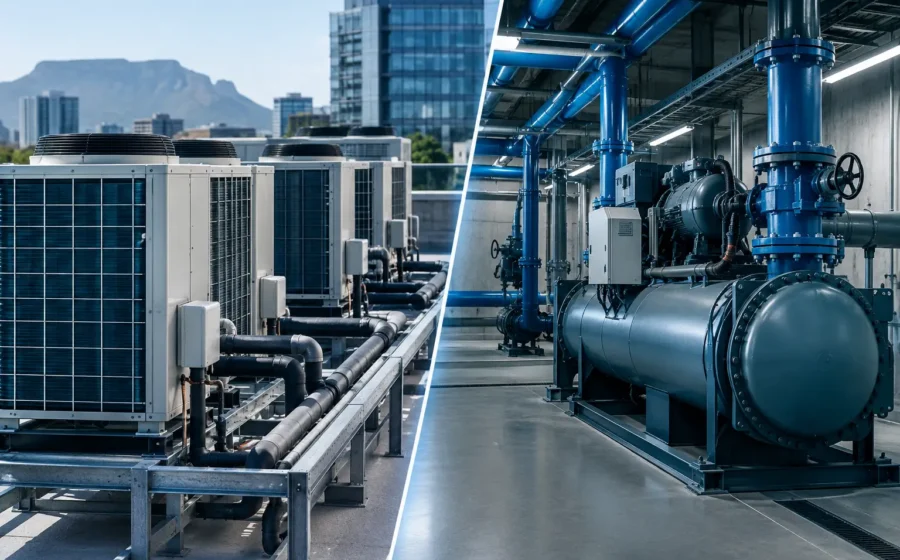
Ventilation is the foundation of most office air-quality strategies. In mechanically ventilated offices, this means confirming that air-handling units, fresh-air fans, dampers, grilles and controls are operating as designed. Even well-specified equipment cannot perform if filters are overloaded, belts are worn, dampers are stuck or sensors are inaccurate.
Maintenance should cover more than a visual check of plant. Teams should verify outdoor-air intake operation, inspect coils and condensate drainage, clean or replace filters to the required specification, confirm fan performance and assess the condition of accessible ductwork. Where complaints are localised, airflow testing and balancing may identify rooms receiving too little supply air or experiencing poor extract.
Demand-controlled ventilation can be valuable where occupancy varies significantly, such as training rooms and meeting suites. It should be configured and maintained carefully. Controls that reduce airflow too aggressively, or sensors that have drifted, can leave heavily used spaces under-ventilated precisely when demand is highest.
Natural or mixed-mode ventilation can reduce reliance on mechanical systems under suitable conditions, but open windows are not a universal answer. Noise, security, rain, outdoor particulate pollution and nearby traffic may limit their usefulness. The strategy should reflect the location, façade design and the needs of the people using the space.
Match filtration to the real risk
Filtration supports ventilation but does not replace it. The appropriate filter depends on the air-handling equipment, available fan capacity, outdoor air quality and the contaminants of concern. A higher-efficiency filter may capture more fine particles, but it also creates greater resistance to airflow. If the system cannot accommodate that pressure drop, airflow can fall and the intended improvement may be lost.
This is why filter upgrades should be assessed as part of the full mechanical system. Check the unit’s design capability, filter housing condition, sealing, pressure monitoring and replacement intervals. Poorly fitted filters allow air to bypass the media, while delayed changes can reduce airflow and place unnecessary strain on fans.
Portable air cleaners can be useful in targeted situations, particularly in enclosed rooms, areas affected by temporary works or spaces where central upgrades are not immediately possible. Their capacity, placement, noise level and maintenance requirements need to match the room. They are a supplementary control, not a substitute for resolving inadequate ventilation or a persistent source of contamination.
Control indoor sources of pollution and moisture
Many air-quality issues originate inside the workplace. Printing areas, poorly ventilated tea points, cleaning cupboards, new carpets, adhesives, damaged ceiling tiles and stored supplies can all affect the indoor environment. The source may be modest on its own but become problematic in a small room with limited air change.
Practical controls include extracting air from kitchens and washrooms effectively, storing chemicals in appropriate ventilated areas, selecting lower-emission materials during fit-out and scheduling high-emission work outside normal occupation where feasible. During refurbishments, isolate work zones, manage dust, protect return-air paths and review whether temporary ventilation or filtration is required.
Moisture requires particularly prompt attention. Leaks, poorly draining condensate trays, roof defects and cold surfaces can create conditions for mould growth. Simply masking odours or repainting stained surfaces does not resolve the underlying cause. Investigate the source of water, dry affected materials properly and assess whether insulation, drainage, ventilation or building-fabric repairs are needed.
Make air quality part of operational management
Office air quality often deteriorates after handover because responsibilities become fragmented. The mechanical contractor may maintain plant, the cleaning provider may select products, the fit-out team may change rooms, and the facilities team may be left without a joined-up record of what has changed.
A more reliable approach brings these activities into a simple operating plan. Record ventilation schedules, filter specifications, sensor locations, maintenance actions, reported issues and space changes. Review the information regularly, especially after seasonal shifts, alterations to occupancy or refurbishment works. This creates an auditable path from reported concern to investigation and practical delivery.
For multi-site organisations, consistent dashboards and workflows can make the process easier to manage. Data should support action rather than create another reporting burden. The useful question is not merely whether a parameter rose, but what plant was running, how the area was occupied and which corrective action is proportionate.
Improve office indoor air quality through coordinated delivery
The most effective interventions are usually coordinated rather than isolated. A filter change may need a fan-capacity check. A comfort complaint may require both airflow balancing and a review of control settings. A fit-out decision may affect ventilation distribution, cleaning requirements and future maintenance access.
TRAD₂ Consultancy Services applies this joined-up perspective across building services, energy performance and technology-enabled delivery. For property owners and facilities teams, the objective is a clear technical route from assessment to corrective work, with performance information that remains useful after the initial issue has been addressed.
The next time an office feels stale or complaints begin to cluster, treat it as an opportunity to understand the building better. A disciplined review of air paths, sources, system condition and operational data can turn an uncertain comfort issue into a manageable facilities decision.