
A commercial building energy audit review should do more than identify a high electricity bill. It should explain how a building uses energy, whether the available data reflects real operating conditions, and which actions merit investment or operational attention. For property owners and facilities teams, the value lies in turning consumption figures into an ordered, defensible plan.
This matters particularly in commercial buildings where energy use is shaped by overlapping systems: air-conditioning, ventilation, lighting, pumps, hot water, lifts, specialist equipment and tenant operations. A single monthly utility account cannot show which system is responsible for avoidable demand, or whether a recent increase is caused by plant performance, changed occupancy or a metering issue.
What an energy audit review should establish
An audit examines the building and its energy systems. A review tests the findings, assumptions and recommended actions against operational reality. It asks whether the baseline is reliable, whether the proposed measures fit the site, and whether the anticipated benefits can be measured after changes are made.
The starting point is a clear picture of the asset. That includes floor area, operating hours, occupancy patterns, tenant arrangements, equipment schedules, known plant constraints and recent changes to the building. A warehouse with intermittent high-load activity cannot be assessed in the same way as an office with long air-conditioning hours, even if their annual electricity consumption appears similar.
Utility data is then considered alongside interval data where it is available. Monthly accounts can reveal broad trends, but half-hourly or finer data is far more useful for identifying overnight baseload, peak demand periods and equipment that continues to run outside required hours. Where sub-metering exists, its coverage and accuracy need to be checked before it is used to allocate costs or justify capital works.
A credible review also distinguishes between an unusual month and a persistent pattern. Weather, load-shedding responses, occupancy shifts, construction work and temporary plant failures can all distort a short data period. Looking at at least a full operating cycle, while accounting for material changes, creates a more useful baseline.
Reviewing commercial building energy audit findings
The strongest audit findings connect measured consumption with physical systems and observed operation. A report that states air-conditioning is the largest energy user may be technically plausible, but it is not sufficiently actionable without identifying the relevant equipment, controls, operating hours and condition.
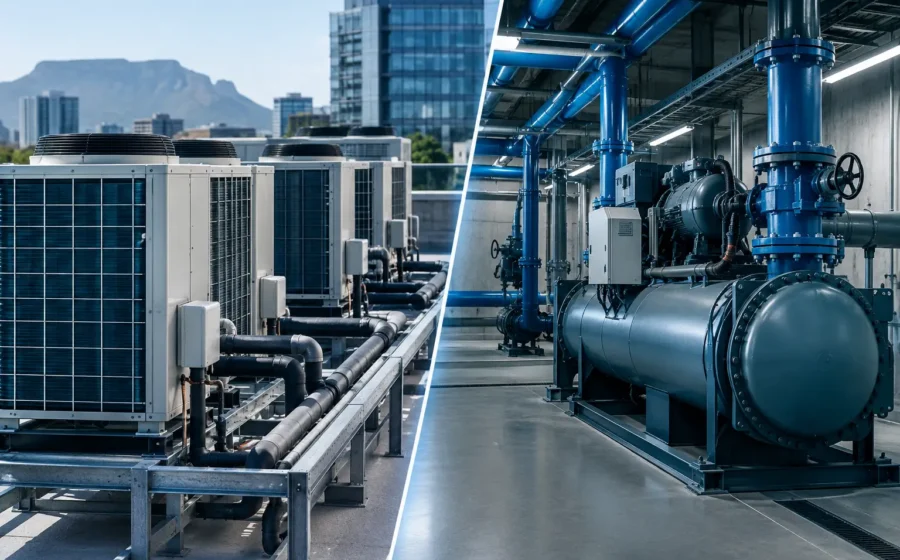
For mechanical systems, the review should consider chilled-water or direct-expansion plant, air-handling units, fan-coil units, extract systems, pumps, thermostats and building controls. Common issues include simultaneous heating and cooling, fixed-speed equipment operating against variable loads, poor time scheduling, blocked filters, incorrect setpoints and plant left in manual override after maintenance.
Lighting requires the same level of care. Replacing older fittings can reduce connected load, but the business case depends on usage hours, lighting levels, control strategy, maintenance requirements and the quality expected in the space. Occupancy sensors can be useful in meeting rooms, stores and low-traffic areas, yet they may be unsuitable where continuous lighting is necessary for safety, security or operational visibility.
The building fabric should not be treated as a separate concern from services. Solar gain, glazing condition, roof insulation, uncontrolled air leakage and external shading affect cooling demand and occupant comfort. However, fabric upgrades can involve greater disruption and longer decision cycles than control changes or maintenance corrections. Their priority should reflect the building’s refurbishment programme, lease position and longer-term operational plan.
Data quality is often the first finding
Many commercial sites have meters but lack usable energy information. Meters may be inaccessible, incorrectly labelled, uncommissioned after alterations or not aligned with the current distribution arrangement. Tenant loads may sit behind landlord meters, while common-area consumption is estimated rather than measured.
In these circumstances, installing more technology is not automatically the answer. The first step is to establish a metering hierarchy that matches how the property is operated and managed. Main incoming supply, major plant, common areas, tenant zones and high-consumption processes may all require different levels of visibility.
The review should also establish who owns the data and who acts on it. A dashboard is useful only if a facilities manager, building operator or appointed service provider has a defined process for investigating abnormal consumption. Technology-enabled delivery works best when the reporting structure mirrors practical responsibilities on site.
Turning observations into a delivery plan
Audit reports sometimes produce long lists of opportunities with no practical distinction between immediate operational corrections and projects requiring design, procurement and shutdown planning. A useful review organises recommendations by effort, dependency and operational impact.
Immediate actions may include correcting time schedules, restoring controls, repairing leaks, cleaning coils, adjusting setpoints or addressing equipment that runs unnecessarily outside normal hours. These measures can be worthwhile because they improve the performance of existing assets, but they still need verification. If no baseline and post-change readings are captured, the operational value remains difficult to demonstrate.
Medium-term measures often involve targeted controls, variable-speed drives, improved sub-metering, lighting upgrades or replacement of inefficient equipment approaching the end of its serviceable life. These require technical coordination. For example, a drive added to a pump or fan must be selected and commissioned with the wider system in mind, not treated as an isolated electrical addition.
Longer-term projects may involve plant replacement, major fabric improvements, on-site generation, storage or a broader building-management-system upgrade. Such decisions should account for asset condition, electrical capacity, maintenance obligations, expected occupancy and future fit-out requirements. A low-energy solution that is difficult to maintain or poorly matched to the building’s use can create a different operational problem.
Questions decision-makers should ask
Before approving recommendations, property and operations leaders should be able to answer several straightforward questions. What evidence supports the finding? Which meter, site observation or operating record confirms it? Who will be affected by the work, and when can it be carried out without unacceptable disruption?
They should also ask how the result will be measured. This does not require perfect data, but it does require an agreed method. Consumption should be compared against a relevant baseline, with material changes in weather, operating hours, occupancy and production activity recorded. For projects intended to reduce peak demand, the measurement must focus on the relevant tariff periods rather than annual consumption alone.
Finally, every recommendation needs an accountable owner. Some actions belong with the facilities team, some require landlord approval, and others need specialist engineering design or tenant coordination. Unclear ownership is one of the main reasons well-founded audit recommendations remain unimplemented.
When an audit review needs wider technical input
Energy performance is rarely resolved by one discipline. A cooling complaint may involve electrical supply quality, failed controls, poor air distribution, inadequate maintenance access or changes made during a fit-out. Likewise, unexpected consumption can result from a plumbing leak, a failed hot-water control, temporary equipment or a networked monitoring system that has stopped reporting.
An engineering-led review brings these dependencies into view. It connects building-services condition, consumption analysis, maintenance practice and future project requirements, allowing the client to decide which interventions should be combined and which can be phased. This is particularly valuable for occupied commercial facilities, where technical work must be coordinated around people, trading hours and operational continuity.
For organisations managing older properties or multiple sites, a common review framework also creates consistency. The same definitions for baseload, operating hours, meter naming and action tracking make it easier to compare buildings without ignoring their individual constraints.
A well-run energy audit review is therefore not a document to file after a site visit. It is a practical management tool: one that helps teams verify what is happening, prioritise the work that matters and keep building performance visible as the site changes.